
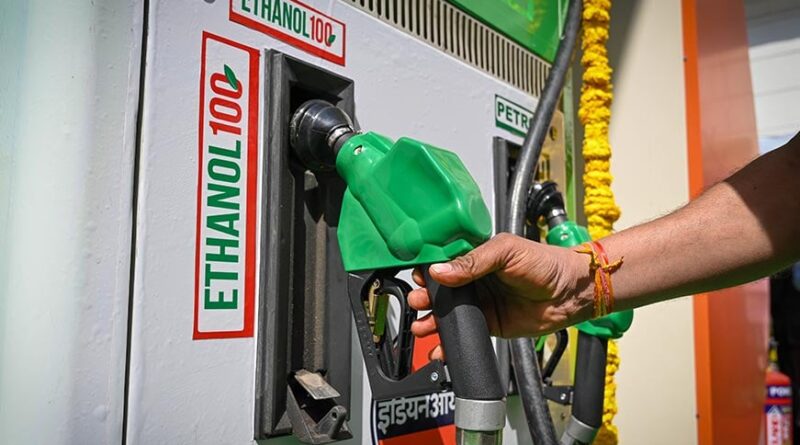
Nitin Gadkari approves E100 fuel regulations for vehicles
Union Road Transport and Highways Minister Nitin Gadkari has announced that he has signed regulations permitting the use of E100 fuel for vehicles in India. The move creates a legal framework for automakers to introduce flex-fuel vehicles designed to run on high ethanol blends.
The announcement comes weeks after E85 fuel was introduced in Delhi, and it signals the government’s intent to expand the use of ethanol beyond the current E20 programme. E20 is fuel with 20 percent ethanol content.
E100 fuel gets legal backing
Speaking at the Sugar, Ethanol & Bio-Energy India Conference in Nagpur, Gadkari said he had signed the file authorising the use of E100 fuel. “Last night, at 8pm, I signed the file, finalising the regulations to legally authorise the use of 100 percent ethanol,” Gadkari said.
The approval marks a significant step beyond India’s E20 programme, which focuses on blending ethanol with petrol. By creating a framework for E100, the government has opened the door for vehicles designed to run on ethanol as a primary fuel, alongside electric, CNG and hybrid alternatives.
More flex-fuel vehicles on the way
The announcement follows the unveiling of Maruti Suzuki’s flex-fuel Wagon R and Hero MotoCorp’s ethanol-compatible motorcycles, both designed to run on higher ethanol blends. Gadkari added that Toyota, Suzuki, Hyundai and MG are expected to introduce E100-compatible vehicles within the next month and a half.
The approval is expected to encourage further investment in flex-fuel engines and ethanol-compatible fuel systems. Vehicles designed to run on high ethanol blends require specialised engine calibration and fuel-system components compared to conventional petrol-powered models.
Challenges remain
While the regulations remove a key hurdle, widespread adoption of E100 is likely to take time. Despite its name, E100 is not pure ethanol. The fuel typically contains around 93-95 percent ethanol, with the remainder comprising petrol and other additives that aid cold starts and fuel handling.
Existing E20-compatible vehicles cannot simply switch to E100. The significantly higher ethanol content requires major changes to engine calibration, fuel-system components and materials, which is why dedicated flex-fuel vehicles are required.
Fuel availability will also be a challenge. Oil marketing companies will need to develop dedicated E100 dispensing infrastructure, while storage and distribution systems may require upgrades to handle ethanol’s different properties.
Moreover, higher-ethanol blends contain less energy than petrol, which means vehicles running on E100 generally consume more fuel for the same distance travelled.
The move is expected to reduce dependence on imported crude oil and increase the use of domestically produced biofuels. However, large-scale adoption will ultimately depend on vehicle availability, fuel infrastructure and consumer acceptance.
This article has been republished from The AutocarIndia.com