
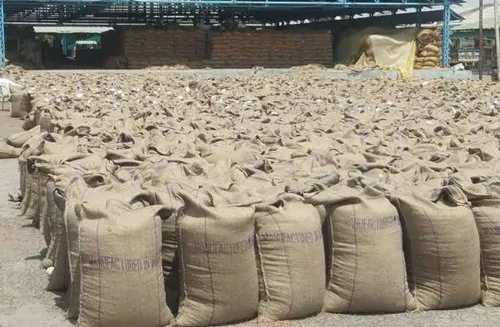
Ahead of wheat purchase, staff of procurement agencies in Punjab go on strike
By Rishika Kriti
Throwing the wheat procurement preparations into disarray, employees of state agencies on Sunday went on a strike in protest over the alleged suicide by Punjab State Warehousing Corporation district manager Gagandeep Singh Randhawa.
The protest, which is being held under the banner of the Joint Coordination Committee of State Procurement Agencies, has brought all operations to a complete standstill days ahead of the procurement season, which will start on April 1.
The coordinated strike has been called by the Punsup Employees Union, Punjab State Warehousing Corporation Field Staff Union, Inspectorate Food Supply Union and Markfed Employees Union.
Harjit Singh Kheri, state president of the Inspectorate Food Supply Union, said, “The employees of state procurement agencies are on collective strike since Sunday afternoon, seeking justice for the deceased’s family. We will remain on strike till the former minister Laljit Singh Bhullar, his father and his PA are arrested. Randhawa’s death on March 21 has triggered deep anger within the procurement workforce.”
Protesting employees alleged that Randhawa was under prolonged mental stress due to external pressure, which ultimately pushed him to take the extreme step. They said it was not an isolated incident and reflected a “systemic failure and deeply troubling working culture” within procurement agencies.
As part of the protest, employees have completely suspended procurement-related activities across the state. The unions made it clear that the strike would continue until the bereaved family expressed satisfaction with the action taken by authorities and a credible process of accountability was ensured.
A senior official of the state Food and Civil Supplies Department stated that the strike was expected to severely disrupt preparatory work for the upcoming procurement season, including logistics, grain handling readiness and storage.
Officials said if the strike continued, it could directly hit the purchase and lifting of grains across the state.
This article has been republished from The Tribune.