
Pulse imports drop 35% in April-January on robust crop, stocks
By Sandip Das
After setting a record in FY25, India’s pulse imports dropped sharply in the current fiscal year, trade sources said, citing adequate carry-forward stocks and robust domestic crop production.
According to provisional data, the country imported pulses valued at $2.97 billion during the first ten months of FY26, a 35% drop compared to the $4.6 billion imported in April-January FY25.
The imports declined by over 18% in volume during April-January 2025–26, reaching 4.9 million tonne (MT) compared to 6.01 MT during the same period last fiscal year. India imported a record 7.3 MT of pulses in FY25
“Overall imports of pulses in FY26 are likely to be just above 5.2 MT,” Satish Upadhyay, secretary, India Pulses and Grains Association, told FE.
He said that during February-March FY26, 0.2-0.3 MT of pulses were likely to be imported from several countries including Canada, Australia, Africa and others.
In FY25, the value of India’s pulse imports rose by 46% to $ 5.48 billion compared to 2023-24.
Slashing Costs
Official sources said the cost of imports have declined by around 30% to 40% in the current year because of higher global output and low imports thus pulling down prices.
Global prices of yellow peas, mostly sourced from Canada and Australia, have been ruling around $300/tonne against $400/tonne a year ago. Similarly, Bengal gram prices have declined to $520/tonne from $700/tonne last year.
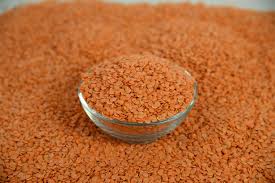
In terms of varieties, yellow peas and masur (lentil) imports during April-January FY26 declined by 49% and 24% to one MT and 0.96 MT, respectively, compared to the same period in FY25.
However there has been a 35% and 15% rise in imports of urad and arhar (pigeon pea) to 0.9 MT and 1.3 MT, respectively, in the first ten months of the current fiscal year-on-year.
India imports about 18%-20% of its annual consumption of pulses – tur, urad, masoor (lentils), yellow peas and Bengal gram – from Canada, Russia, Brazil, Myanmar and Africa.
Pulse production in the 2024-25 crop year was estimated at 25.68 MT. In terms of share in total production, chana (45%), moong (15%), tur (14%) and urad (8%) have major share
Govt likely to extend duty free import of pigeon pea & urad
Policy Outlook
Meanwhile sources said the duty-free import of tur and urad varieties of pulses is likely to be extended beyond March 2026. Similarly the import duties of 30% and 10% on yellow peas and lentils are likely to be extended for another year.
With a share of 29.5% , yellow peas have the largest share in total pulse imports in 2024-25, followed by gram (22%), tur (16.7%), lentil (16.6%) and urad (11.2%).
“Between 2020-21 and 2024-25, the import dependency in pulses increased from 9% to 23.1%. However, improved availability of pulses due to higher imports has softened inflation in pulses in 2024-25,” the Commission for Agricultural Costs and Prices (CACP) stated in its price policy report for rabi crops for the marketing season (2026-27).
To reduce import dependence, the government has initiated several measures including assured buy back at minimum support price (MSP) and a mission for Aatmanirbharta (self-reliance) in pulses, which includes expanding the area under cultivation in non-traditional regions.
This article has been republished from The Financial Express.