
Union Budget 2026: National Green Hydrogen Mission allocation maintained at ₹600 crore for FY27
By Abhimanyu Sharma | Jomy Jos Pullokaran
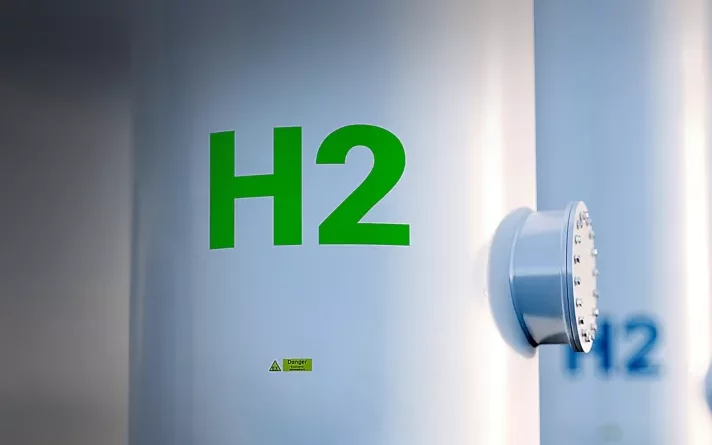
In the Union Budget 2026, presented by Finance Minister Nirmala Sitharaman on Sunday (February 1), the allocation for the National Green Hydrogen Mission has been maintained at ₹600 crore for FY2026–27, unchanged from the Budget Estimates for 2025–26. This is up from the Revised Estimates of 2025–26, which stood at ₹300 crore.
India is targeting 5 million metric tonne (MMT) of Green Hydrogen production annually by 2030. Hydrogen mobility pilots have been launched across 10 routes, involving 37 fuel cell and hydrogen internal combustion engine vehicles.
India had launched the National Green Hydrogen Mission (NGHM) in 2023, as an umbrella programme that aims to establish a Green Hydrogen ecosystem and catalyse a systemic response to the opportunities and challenges in the sector.
By 2030, the government aims to support the Mission by about 125 GW of new renewable energy capacity dedicated to green hydrogen production, along with investments of over ₹8 lakh crore. The Mission is expected to create over 6 lakh jobs, reduce fossil fuel imports by more than ₹ 1 lakh crore and avoid nearly 50 MMT of greenhouse gas emissions every year by 2030.
Green Hydrogen is hydrogen produced using renewable energy, such as solar or wind power, instead of fossil fuels. In this process water is split into hydrogen and oxygen through electrolysis, using electricity from solar panels or wind turbines.
According to standards notified by the Government of India, hydrogen made this way is considered “green” if the total emissions from the process are very low, not more than 2 kg of CO₂ equivalent for every 1 kg of hydrogen produced. Green Hydrogen can also be produced by converting biomass (like agricultural waste) into hydrogen, as long as emissions remain below the same limit.
As of May 2025, 19 companies had been allocated a cumulative annual production capacity of 8,62,000 tonnes of Green Hydrogen every year and 15 firms had been awarded 3,000-MW annual electrolyser manufacturing capacity. India has also launched pilot projects in steel, mobility and shipping sectors.
Launched in January 2023, NGHM has an initial outlay of ₹19,744 crore till Financial Year 2029-30, which includes ₹17,490 crores for the Strategic Interventions for Green Hydrogen Transition (SIGHT) programme, ₹1,466 crores for pilot projects, ₹400 crores for research and development (R&D), and ₹388 crores towards other Mission components.
The Mission focuses on four key pillars, including policy and regulatory framework, demand creation, research and development & innovation, and enabling infrastructure and ecosystem development, and aims to position India as a global hub for green hydrogen production, use, and export.
To augment the Mission’s vision, the government has also launched multiple schemes to accelerate production and use of green hydrogen, promote domestic manufacturing and exports, ensure regulatory compliance, and strengthen public–private partnerships.
(i) Strategic Interventions for Green Hydrogen Transition (SIGHT) Scheme: A financial incentive mechanism with an outlay of ₹17,490 crores up to 2029-30 provides incentives for the manufacturing of electrolysers that are used for production of green hydrogen.
(ii) Development of Green Hydrogen Hubs: In October 2025, the Ministry of New and Renewable Energy (MNRE) had announced the recognition of three major ports Deendayal Port Authority (Gujarat), V.O. Chidambaranar Port Authority (Tamil Nadu), and Paradip Port Authority (Odisha) as Green Hydrogen Hubs under the NGHM.
(iii) Standards, Certification and Safety: Launched in April 2025, the Green Hydrogen Certification Scheme of India (GHCI) provides a national framework to certify hydrogen as “green” by assessing its greenhouse gas emissions across the entire production cycle. The scheme aims to ensure that only hydrogen produced using renewable energy, and within the prescribed emission limits, can be officially labeled as Green Hydrogen. It aims to provide transparency, traceability, and credibility for producers, buyers, and export markets.
Under the GHCI, obtaining a ‘Final Certificate’ is mandatory for any green hydrogen production facility in India that (a) receives subsidies or incentives from the central or state governments, or (b) sells or uses the hydrogen domestically (in India).
The Bureau of Energy Efficiency (BEE) is the Nodal Authority responsible for accrediting agencies that monitor and certify projects.
(iv) Strategic Hydrogen Innovation Partnership (SHIP): The Mission fosters public-private partnerships for R&D through the Strategic Hydrogen Innovation Partnership. It is designed to support the development of advanced, globally competitive hydrogen technologies through collaborative research involving government institutions, industry, and academic organisations. The programme includes the creation of a dedicated R&D fund with contributions from both the government and industry. Under SHIP, consortium-based research will be encouraged to leverage the strengths of national scientific institutions such as BARC, ISRO, CSIR, IITs, IISc, and other partners. The objective is to drive innovation across the Green Hydrogen value chain and support domestic manufacturing capability.
In October 2025, Sembcorp Industries signed MoUs with V.O. Chidambaranar and Paradip Port Authorities to develop integrated green-hydrogen and ammonia hubs for production, storage and exports.
In September 2023, India had signed an MoU with the Saudi Arabian energy minister for overarching cooperation in the field of Green Hydrogen & Ammonia to set up capacities and grid interconnections in both the nations. Back then, the government had described the move as a game changer as solar power’s transmission is cheaper compared to its storage worth Rs. 10/kWh.
Previous budgets:
Union Budget 2025 gave a budgetary allocation of ₹600 crore for the NGHM, which was 100% more than the previous ₹300 crore provided in the Expenditure Budget document for 2024-25. The MNRE had issued guidelines in 2024 to undertake pilot projects for use of Green Hydrogen in the steel sector. Named as “Scheme Guidelines for implementation of Pilot projects for use of Green Hydrogen in the Steel Sector under the National Green Hydrogen Mission,” the guidelines are being implemented along with other initiatives to replace fossil fuels and fossil fuel-based feedstock with Green Hydrogen and its derivatives.
These pilot projects are slated to be implemented through the Ministry of Steel and the implementing agencies nominated under the scheme, with a total budgetary outlay of ₹455 crores till FY 2029-30.
As adoption of Green Hydrogen technologies in India is in its initial stage through demonstration projects, the impact on job creation, reduction in dependence on oil and exports has been limited so far. However, the following areas are witnessing use of Green Hydrogen:
1. GAIL Limited has started India’s maiden project of blending hydrogen in City Gas Distribution grid. 2% by volume of hydrogen is being blended in CNG network and 5% volume of hydrogen is being blended into PNG network at City Gas Station of Avantika Gas Limited (AGL), Indore in the state of Madhya Pradesh.
2. NTPC Limited had initiated blending of Green Hydrogen up to 8% (vol/vol) in PNG Network at NTPC Kawas Township, Surat, Gujarat from January 2023
3. Hydrogen-based Fuel-Cell Electric Vehicle (FCEV) Buses being used in Leh and Greater Noida by NTPC
4. Oil India Limited has developed a 60 kW capacity hydrogen fuel cell bus, which is a hybrid of an electric drive and a fuel cell
5. Demonstration pilot plants for production of Green Hydrogen through water electrolysis are using solar power, biomass oxy steam gasification and CBG reforming for refuelling of Hydrogen Fuel Cell buses by Indian Oil
Three areas have been identified by the government as thrust areas for the pilot projects in the steel sector, namely: use of hydrogen in direct-reduced ironmaking (DRI) process; use of hydrogen in Blast Furnaces and substitution of fossil fuels with Green Hydrogen in a gradual manner. The scheme also supports pilot projects involving any other innovative use of hydrogen for reducing carbon emissions in iron and steel production. The scheme envisages that considering the higher costs of Green Hydrogen at present, steel plants could begin by blending a small percentage of Green Hydrogen in their processes and increasing the blending proportion progressively with improvement in cost-economics and advancement of technology.
The guidelines also note that upcoming steel plants should be capable of operating with Green Hydrogen, thus ensuring that these plants are able to participate in future global low-carbon steel markets. The scheme will also consider greenfield projects aiming at 100% green steel.
The use of Green Hydrogen and its derivatives in the steel sector, through the proposed pilot projects, aims to lead to the development of necessary infrastructure for use of Green Hydrogen in the iron & steel industry and establish a Green Hydrogen ecosystem in the steel sector. The utilisation of green hydrogen in the steel industry is expected to increase over the years, with the expected reduction in its production cost.
This article has been republished from The CNBC TV18.